“In so far as this mask represents the conception we have formed of ourselves—the role we are striving to live up to—this mask is our truer self, the self we would like to be.”
-Erving Goffman (1922 - 1982)
Sociologist Erving Goffman defined social interaction as a form of ‘dramaturgical performance’, viewing everything as the product of all bodily management performed by humans on stage. In The Presentation of Self in Everyday Life, he argued that ‘In so far as this mask represents the conception we have formed of ourselves—the role we are striving to live up to—this mask is our truer self, the self we would like to be’*. For Goffman, the self is not a fixed inner entity, but the 'dramatic effect' itself that arises from faithfully performing the role expected by the audience. Boris Groys(1947–) points out that this ‘performativity’ has been further accelerated in today's digital media environment. He terms the act of producing one's avatar and public persona through social media ‘Self-Design’, analyzing that while this was once a matter of personal choice, it has now become an unavoidable ‘obligation’ demanded by society. Even private spaces such as bedrooms or bathrooms that are the 'Back Region' that Goffman defined as places to removes the mask and rests, are now constantly summoned and exhibited as the 'Front Region' of social media.
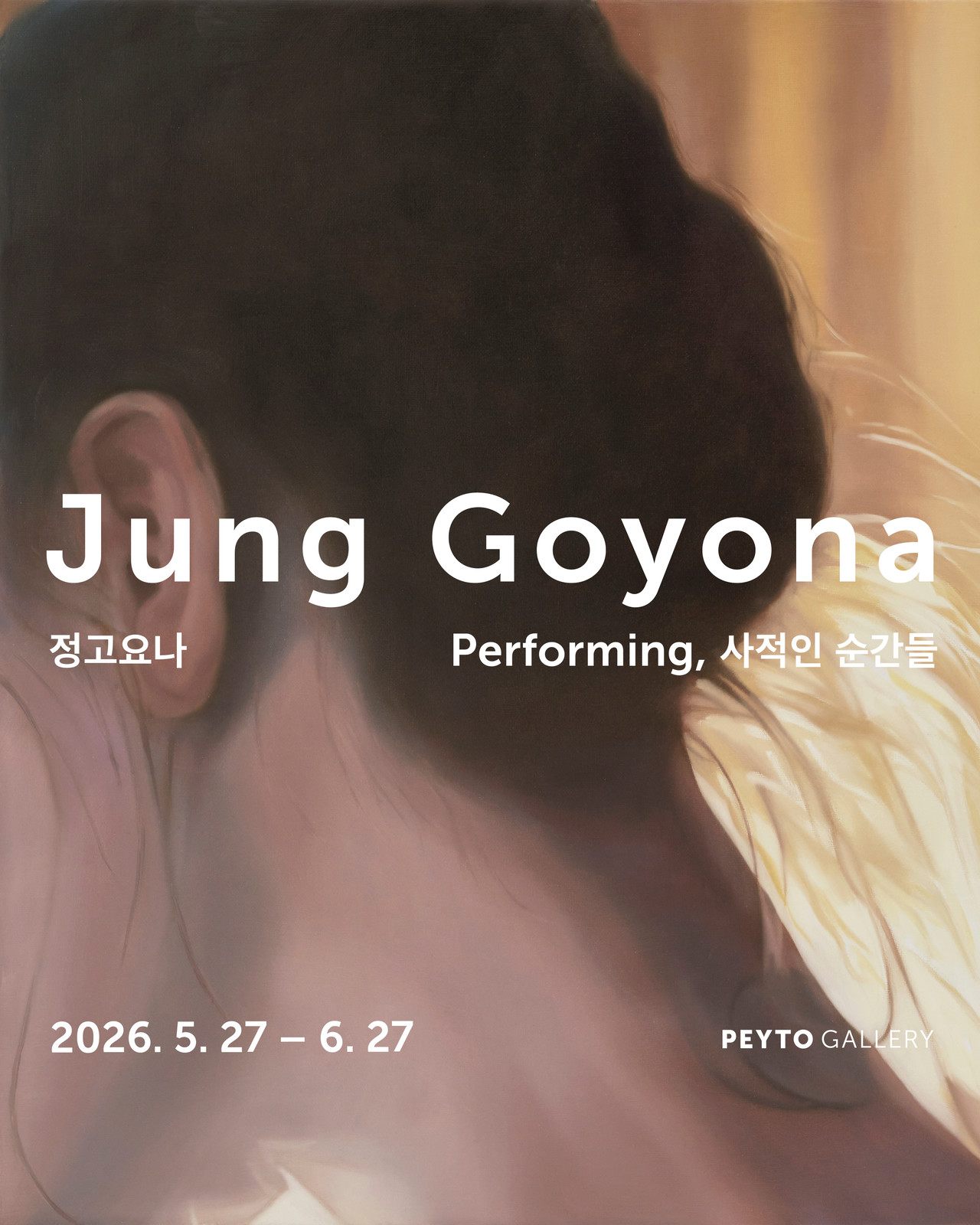
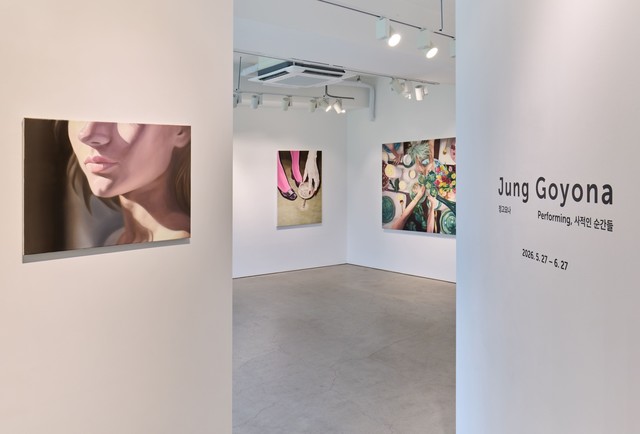
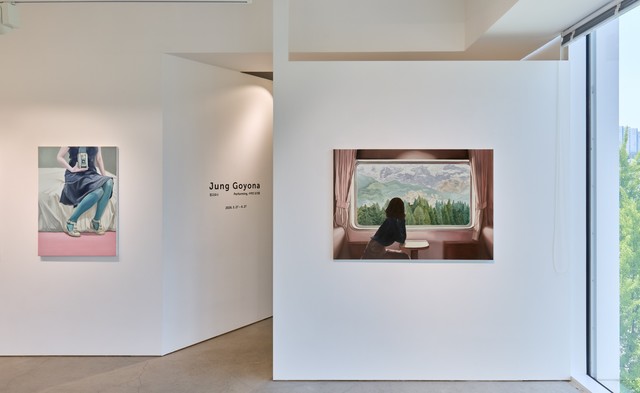
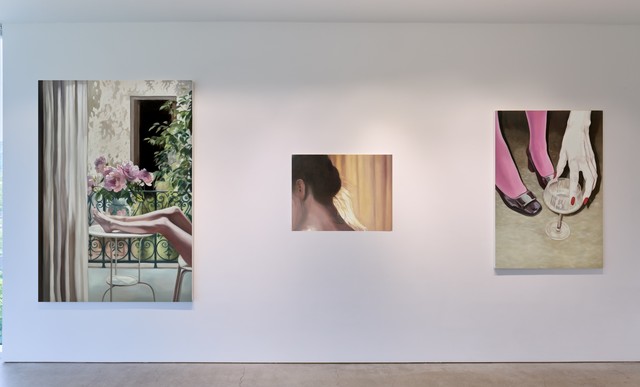
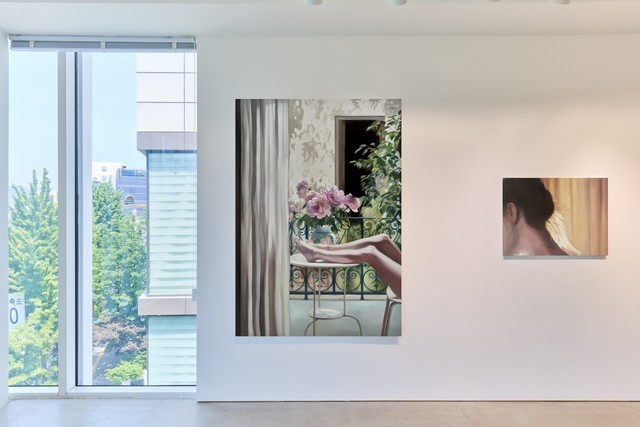
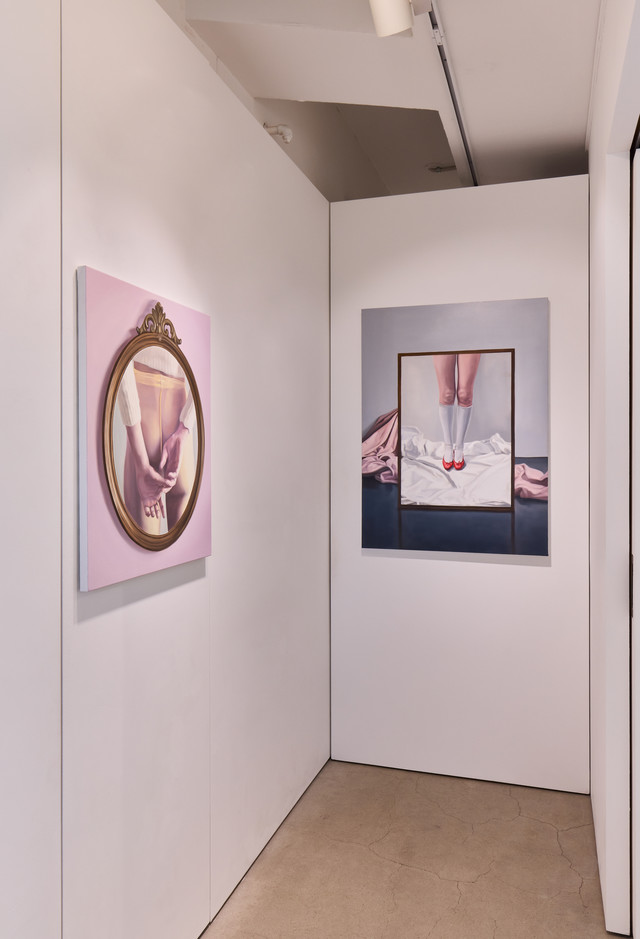
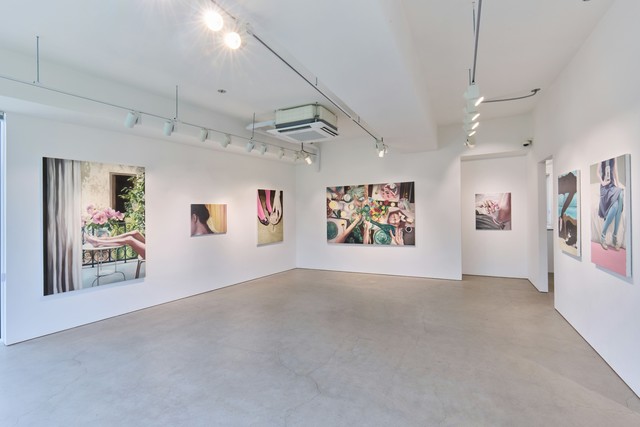
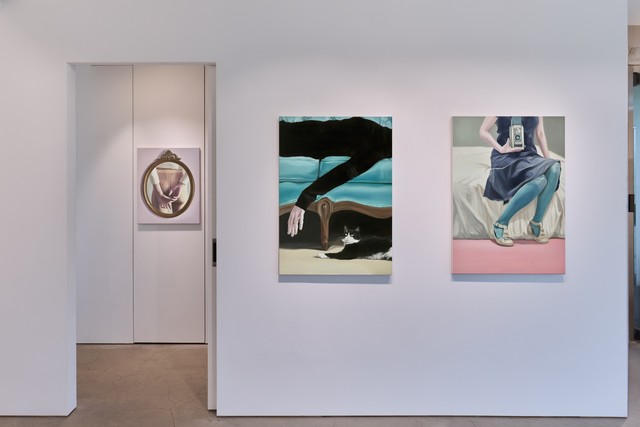
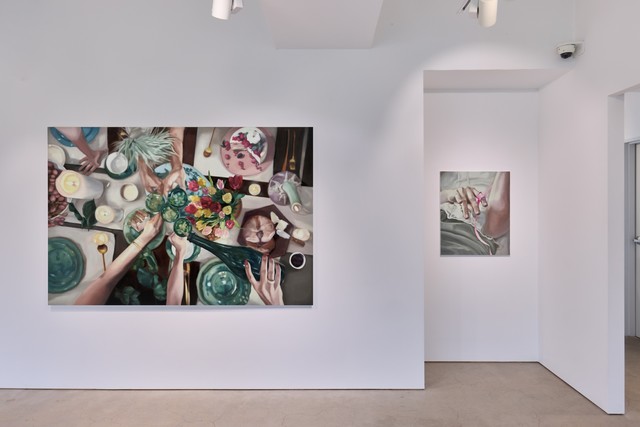
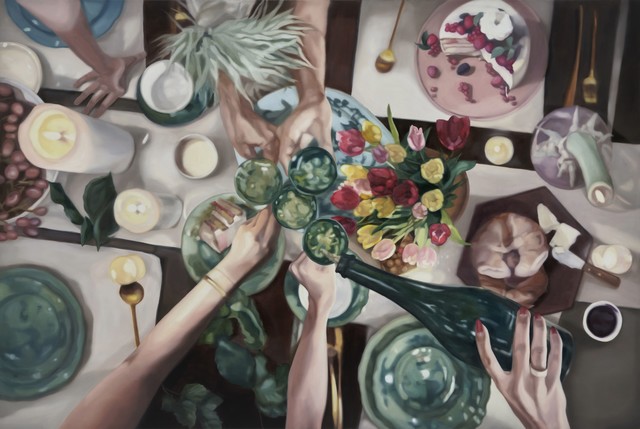
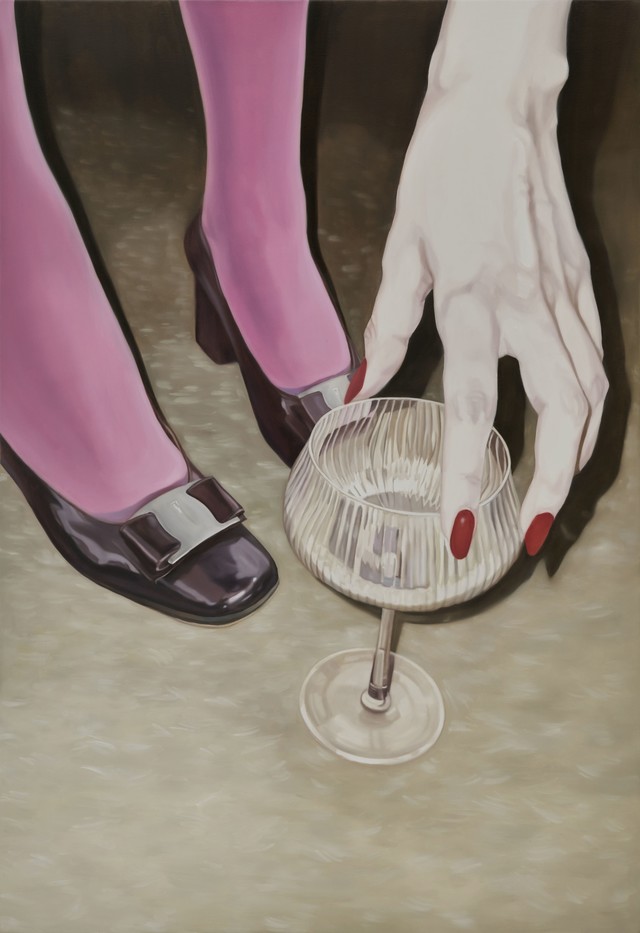
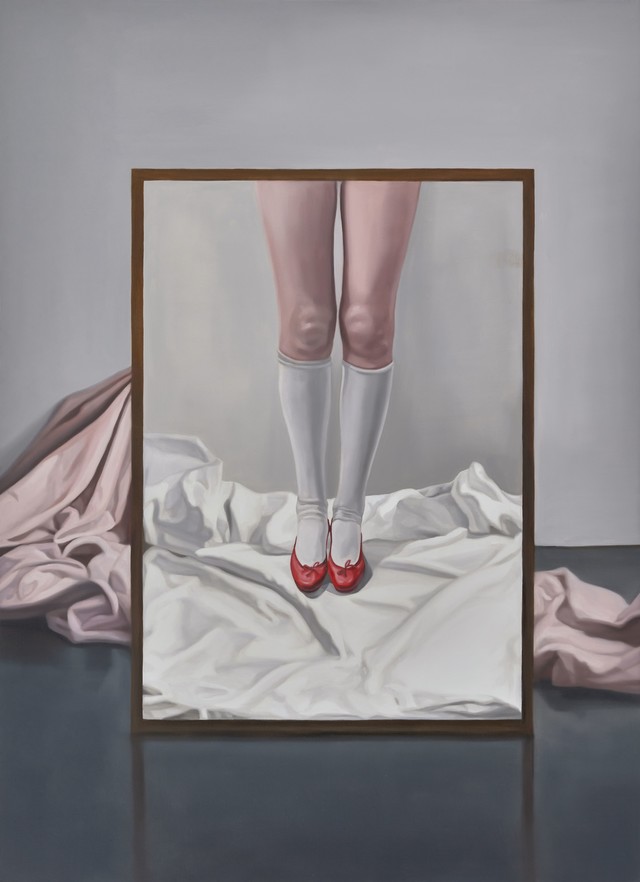
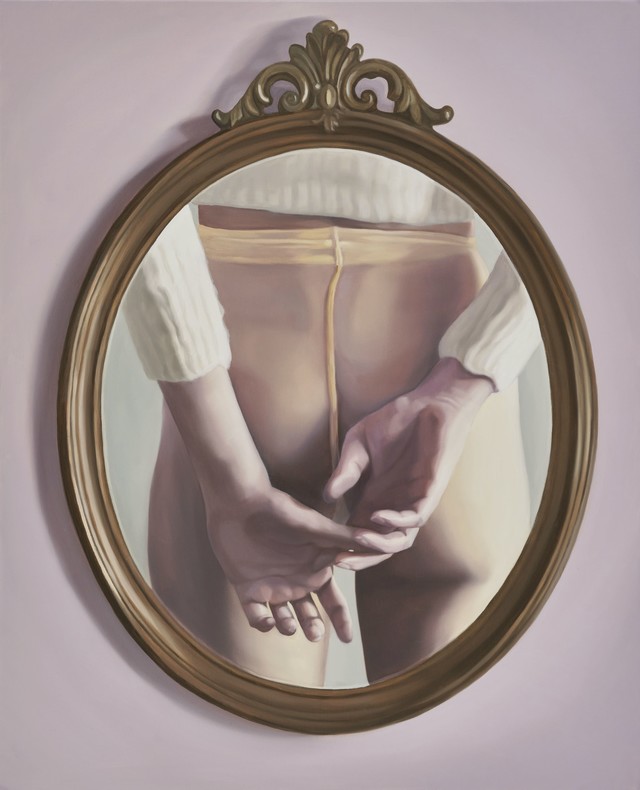
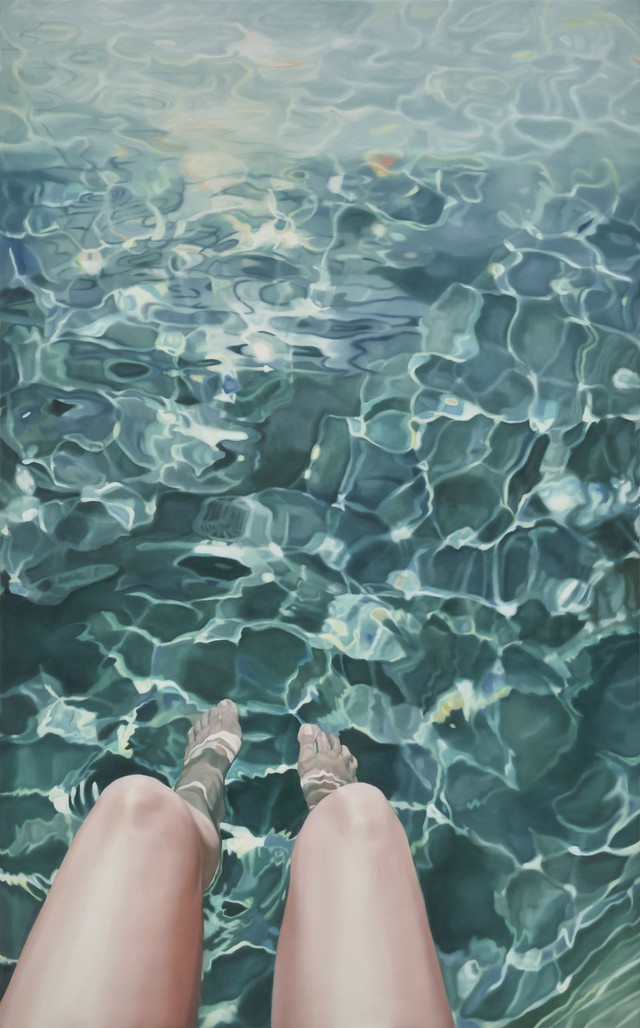
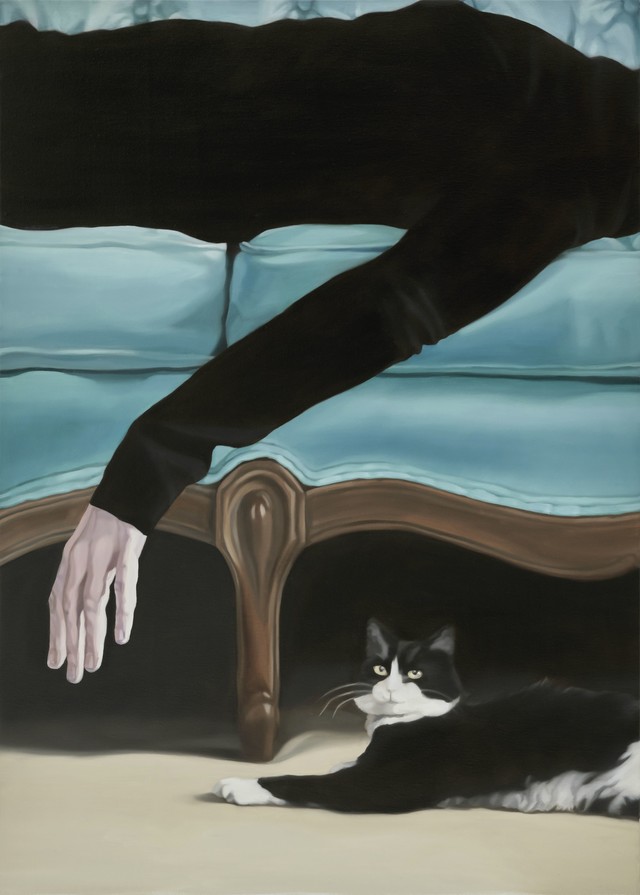
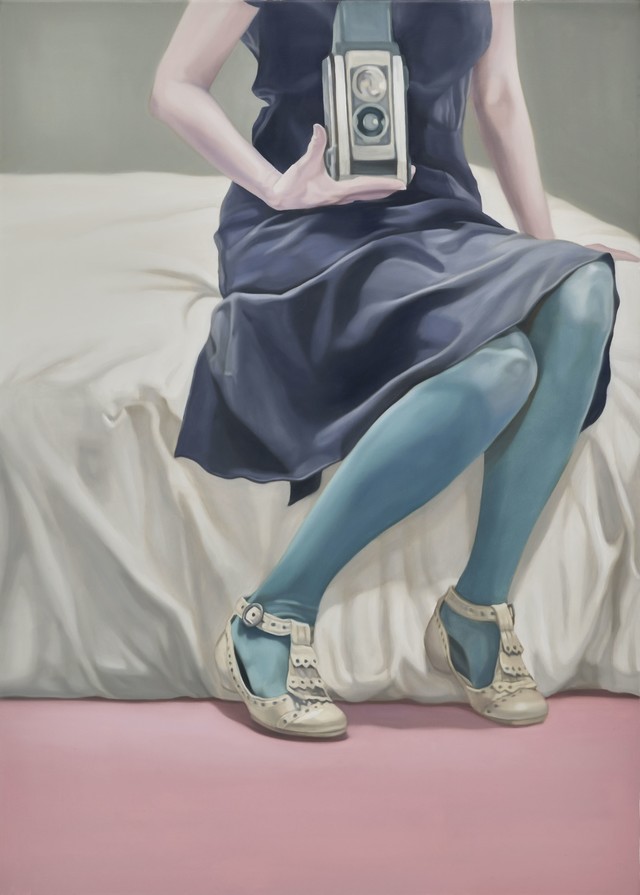
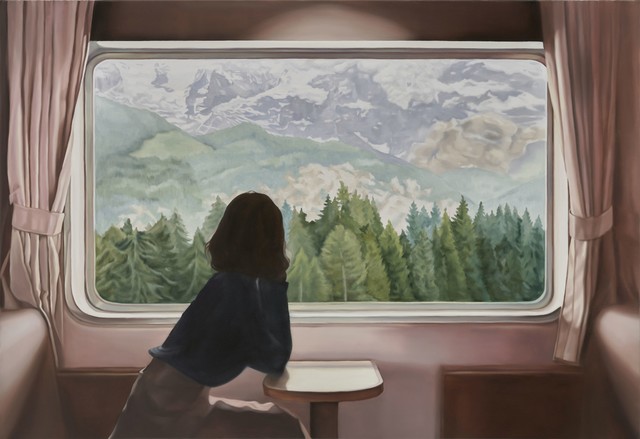
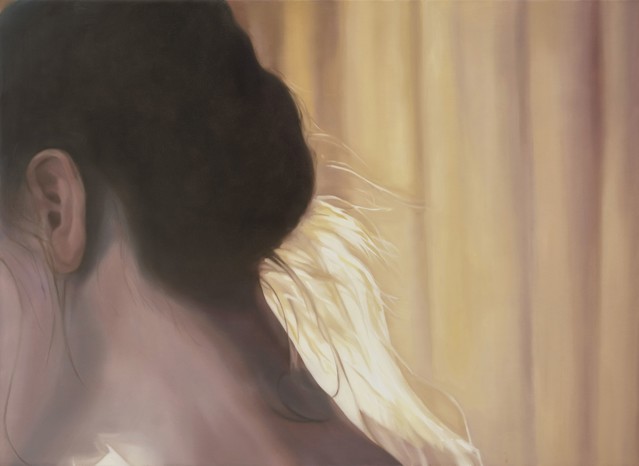
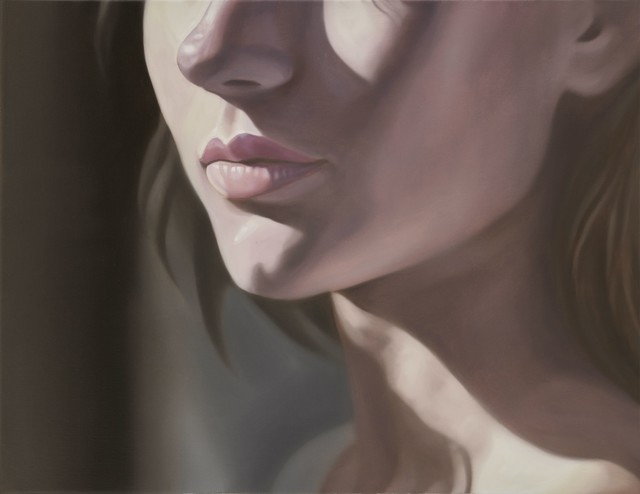
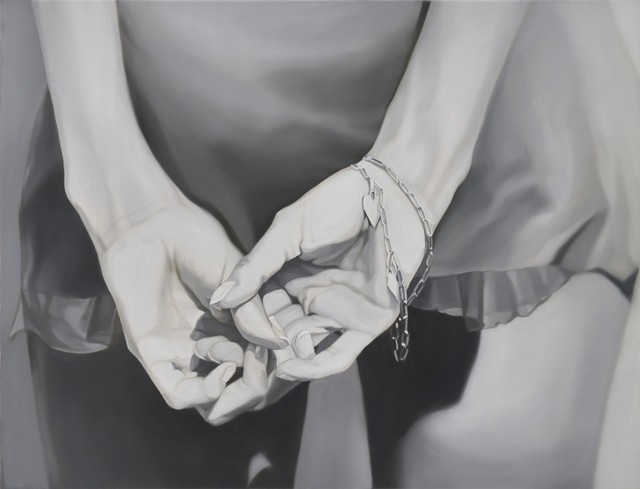
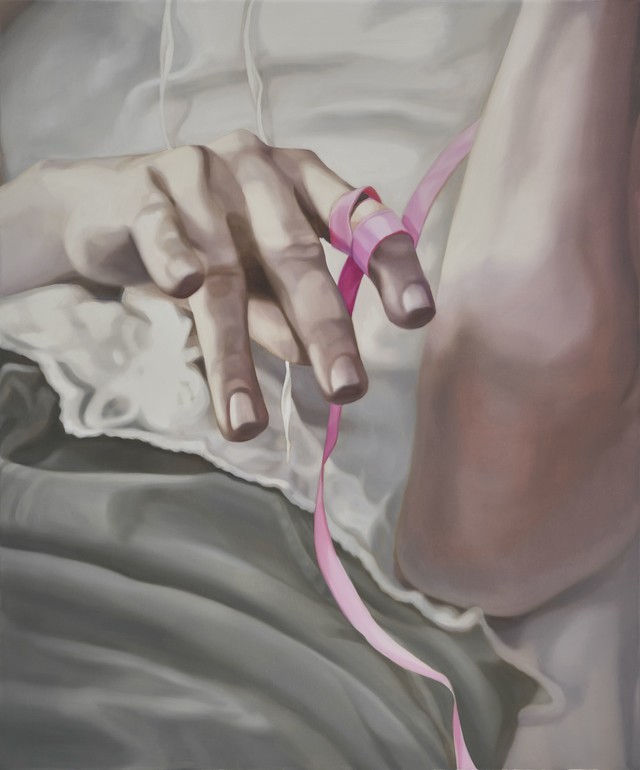
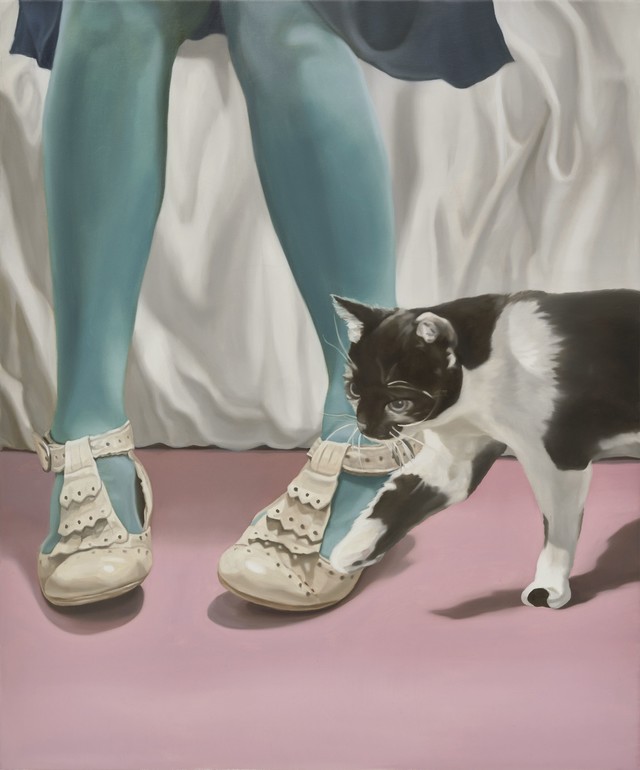
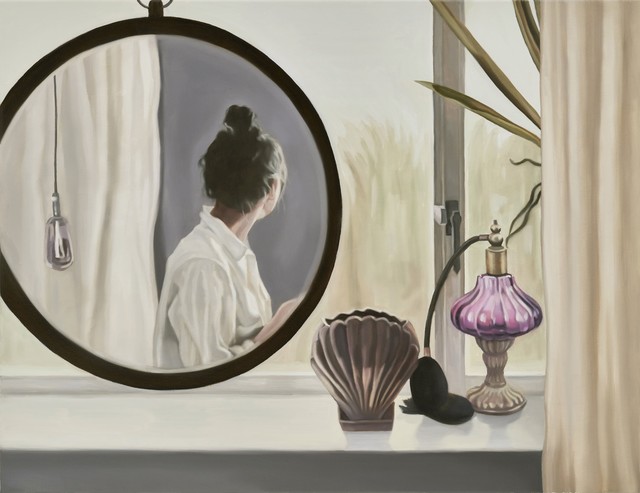
The exhibition <Performing, Private Moments> presents new works by Jung Goyona that capture the moments at which the performing(performative) attitude of modern individuals—for whom the mask becomes the truer self**—reaches its peak. Jung, who has been keenly capturing the staged lives of the SNS era and the gaze of contemporaries, portrays the contemporary sensibility where intimacy and solitude coexist through a voyeuristic gaze into the lives of others, privately edited moments, and partially cropped female bodies, expressing them with her signature tension and detail. Combining a fashionable sensibility and painterly density evoked by cinematic compositions and softly bleeding colors, her work articulates an original visual language that stands as distinctly original within contemporary painting.
While the issues of media's 'gaze' and 'filtering' were explored at a more intimate level in the 2024 exhibition <Floating Gaze>, focusing on the gazes that float while observing the lives of others, the new works face the performative attitude of modern people who monumentally present themselves and pause among those gazes. Moving beyond the conventional method of composing scenes with lingering lights, she focuses on the sculptural and monumental nature of the paused posture of a figure fixed within the frame. This can be understood as an aesthetic attempt that simultaneously captures the contemporary desire to record a fleeting moment forever while giving existential weight to the ephemeral virtual images.
Jung’s work, which translates the existential solitude and deficiency of modern people hidden behind the phrase ‘there is no despair on Instagram’ into the slow medium of oil painting, poses the question of for whom we stage and design ourselves, while simultaneously capturing the subtle tension flowing beneath the staged composure stirring profound empathy in the viewer.
By dwelling in the intimate consciousness of the figures within the works, this exhibition welcomes the visitors to discover layers of emotion that are still alive and breathing, and to encounter a space of artistic coexistence where they can recover the lost ‘inner intimacy’ amidst the contemporary landscape where the virtual and reality intersect.
*In this passage, Goffman explains that the ‘mask’ we wear to perform social roles is not merely a tool to conceal our true selves, but rather a projection of the ideal self we aspire to become and a core component of our personality. Erving Goffman, translated by Jin Sumi, The Presentation of Self in Everyday Life, Hyunamsa, 2026, p. 34.
**The use of the term ‘truer self’ rather than the general ‘true self’ carries the philosophical significance that the ideal self(mask) we aspire to be reveals the core of our personality better than our biological individuality. In his book The Presentation of Self in Everyday Life, Goffman directly used the expression ‘truer self’ when describing the ‘mask’ we wear while performing social roles.